


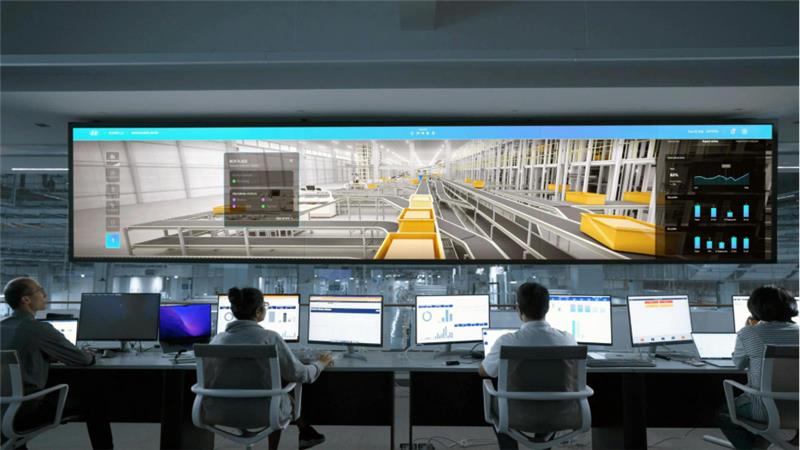
A powerful transformation is reshaping the world’s digital foundations. Data centers, the backbone of the internet economy, are evolving into AI-native facilities—autonomous systems that run, cool, and optimize themselves. According to the Uptime Institute’s Global 2025 Study, 40 percent of new facilities breaking ground this year are designed with embedded AI-driven management systems (Uptime Institute).
AI-native data centers mark the next frontier in enterprise computing. They merge automation, sustainability, and scalability into a unified architecture focused on efficiency, resilience, and continuous learning.
The Architecture of Intelligence
Unlike traditional facilities that rely on fixed system monitoring, AI-native infrastructures learn and adapt in real time. Predictive algorithms continuously monitor environmental conditions, power draw, and hardware utilization to balance performance against energy cost.
New chip architectures from NVIDIA, AMD, and Intel allow real-time inference for facility management, providing the equivalent of a cognitive nervous system that optimizes every watt of power used. The NVIDIA Grace Hopper Superchip and AMD MI300X are key to enabling these predictive capabilities at hardware level.
The Role of Automation and Robotics
AI-native centers combine digital intelligence with physical robotics. Autonomous cooling systems adjust airflow dynamically, while AI-managed robotic units inspect racks, monitor cabling, and conduct preventive maintenance. Microsoft’s Athens Project showcases this fusion, lowering cooling energy by up to 15 percent compared to conventional systems (Microsoft Sustainability Innovation).
Google’s DeepMind algorithms, which reduced data-center cooling energy by nearly 30 percent, now operate autonomously across multiple facilities, training new models based on continuous performance data (DeepMind Report).
Sustainability and Efficiency Revolution
Sustainability has become as critical as uptime. With global data center power consumption projected to exceed 1,000 TWh annually by 2030 (IEA Energy Outlook 2025), the need for efficiency is existential.
AI-native centers use advanced liquid cooling and real-time load shifting to balance global grid demands. They can dynamically allocate workloads based on renewable availability, aligning compute demand with solar and wind output.
Net-zero emission designs, pioneered by Equinix and Digital Realty, now operate with PUE ratings nearing 1.05, setting new efficiency benchmarks.
Convergence of AI, 5G, and Edge Systems
The next evolution of AI-native data centers will link directly with edge nodes through 5G and satellite networks. This seamless integration reduces latency for AI inference, enabling real-time analytics in domains like autonomous transport, healthcare imaging, and smart cities.
Hybrid architectures will ensure that AI workloads are proximate to both users and sensors, creating a data infrastructure that is not just responsive but predictive.
Outlook: From Facilities to Living Ecosystems
By 2030, the world’s largest data centers will function less like buildings and more like adaptive digital organisms—self-regulating, self-healing, and fully optimized for sustainability and performance.
AI-native data centers represent the end of static infrastructure and the beginning of a world where intelligence is embedded in the walls of the digital economy itself.